English
If you are searching for led video wall manufacturers in delhi because someone told you "just get a local vendor, it's cheaper and they'll fix it fast," you're halfway right. Delhi–NCR is genuinely one of India's biggest hubs for LED display supply and integration, with most of the actual work happening in Okhla, Naraina, Wazirpur, Kirti Nagar, plus the Noida and Gurgaon belts. But here's the catch: a huge share of the companies listing themselves as "manufacturers" are system integrators or trading desks who buy cabinets from Shenzhen or from domestic assembly units and then handle design, installation and service themselves. That's not a bad thing — often it's exactly what you want — but it changes the price, the lead time, and who you call when a cabinet goes dark two weeks before an event.
So let's cut straight to the part you actually need.
The short answer: if you want the lowest hardware price and you know your specs, go direct to a factory that does its own assembly (many will ship into Delhi from Gujarat, Hyderabad or Noida). If you want one throat to choke — design, structure, installation, content and after-sales all handled locally — pick a Delhi-based integrator with its own service team and a verifiable install base. For most buyers in Delhi, the second option saves more money than it costs, because the real expense isn't the screen, it's the downtime.
This matters more than pixel pitch. In Delhi's market you'll run into four kinds of outfit, and they quote differently for the same-looking wall.
| Type | What they actually do | Price | Best for | Watch out for |
|---|---|---|---|---|
| Own-assembly factory | SMT/assembly in-house, sources LED modules & driver ICs, ships nationwide | Lowest | Large orders, standard specs, repeat buyers | Slower on custom engineering; may push stock they already have |
| Delhi-based integrator/dealer | Designs, sources, installs, services; may brand as "manufacturer" | Mid | One-stop job, tight deadlines, non-standard sites | Margin layered on hardware; ask who actually honours the warranty |
| National brand with Delhi branch | Rebrands OEM hardware, adds calibration, software, local spares | Highest | Mission-critical screens, multi-site rollouts | You pay for the name; confirm the local team can actually reach you |
| Event/rental house | Rental cabinets, touring rigs, temporary installs | Per-project | Weddings, concerts, exhibitions, short-term | Rental gear isn't optimised for 24/7 permanent use |
A practical test I use: ask them whether the cabinets are assembled in-house or sourced, and then ask for the cabinet model number and the LED package brand. Follow up by asking where the sending card and processor come from. A company that built it will answer in about ten seconds. A middleman will say "let me check with our technical team" and come back a day later. That one pause tells you more than any brochure.
Also worth knowing: many "Delhi manufacturers" do final assembly, aging test and calibration locally while importing modules and driver ICs. That's standard industry practice worldwide, nothing shady about it. What isn't acceptable is charging you a premium for "fully indigenous" hardware without being able to show you the line.
Quotations in this market look nearly identical until you put them side by side. These are the rows I actually compare.
| Spec | What to ask for | Why it matters |
|---|---|---|
| Pixel pitch | P2.6/P3.9 indoor; P4.8/P6.6/P8/P10 outdoor | Pitch drives resolution and price together |
| LED package | Nationstar/Kinglight gold wire, black face for indoor | Contrast under lights; gold wire handles heat and humidity better |
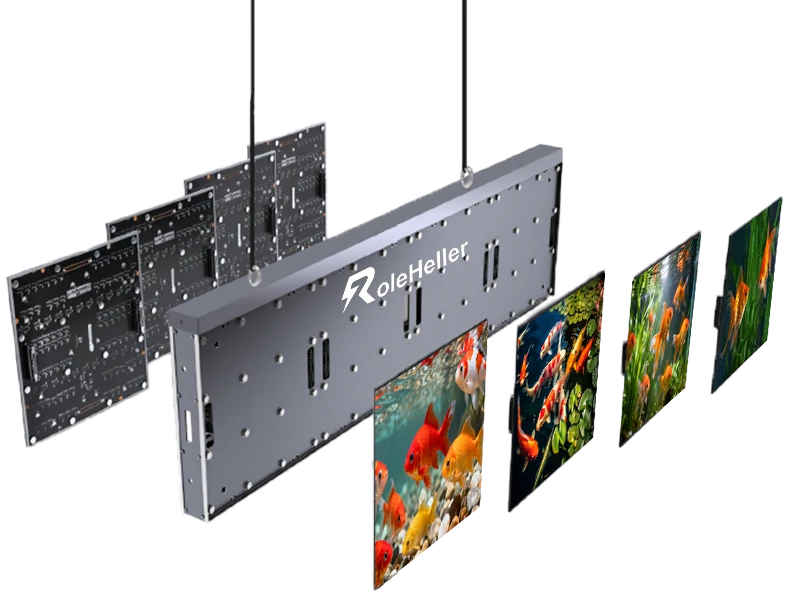
| Driver IC | MBI5153 / ICN2053 or equivalent | Cheap ICs cause ghosting and camera smear |
| Refresh rate | ≥3,840 Hz if you're filming the screen | Lower rates throw scan lines into video feeds |
| Brightness | 600–1,200 nits indoor; 4,500–6,000+ nits outdoor | Over-bright indoor screens look harsh and waste power |
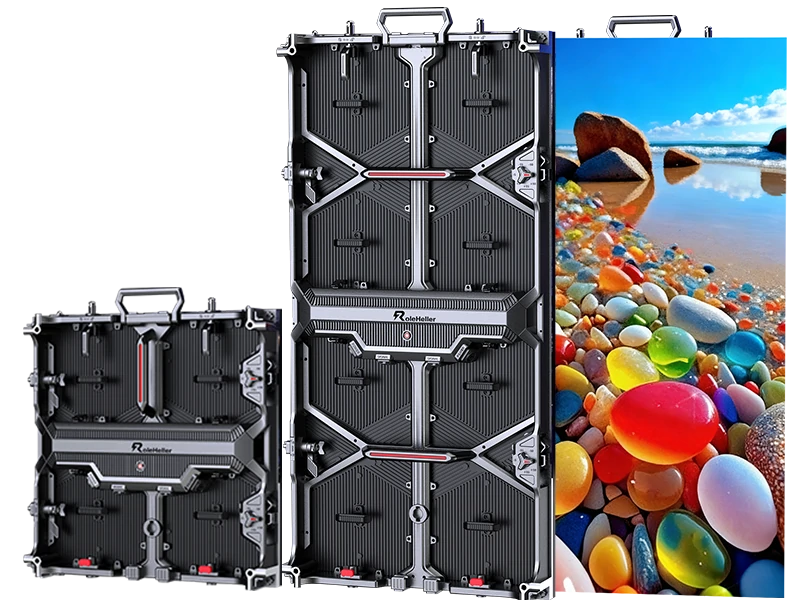
| Cabinet | Die-cast aluminium, flatness within tight tolerance | Affects seamlessness; warped cabinets show seams after a year |
| IP rating | IP43–IP54 indoor; IP65 front-sealed outdoor | Don't pay IP65 for an air-conditioned mall atrium |
| Service | Front-service if there's no rear access | Most Delhi retail and lobby installs have zero rear access |
| Power supply | Branded PSU, correct voltage, with surge protection | Delhi power fluctuations are real; add a stabiliser/UPS for the processor |
| Warranty | 2–3 years written, with exclusions listed | Modules and PSU usually covered; labour and freight often aren't |
| Spares | 3–5% spare modules plus spare PSUs and receiving cards | One dead module makes a whole wall look patchy |
Two things people consistently forget. First, resolution follows size. A 4 m × 3 m P3.9 wall gives you roughly 1,024 × 768 pixels — that's not Full HD. If your client demands native 1080p, the wall needs to be closer to 7.5 m × 4.2 m. Decide the resolution you need, then let the physical size fall out of that. I've seen too many Delhi installs where the screen went up first and everyone realised afterwards that the PowerPoint looked soft.
Second, power draw. Ask for average consumption, not peak. Peak numbers are basically never reached with normal content, and venues — especially older buildings in Connaught Place or Chandni Chowk — will balk at a peak figure that doesn't reflect reality. Also plan for heat behind the wall and whether the space needs extra cooling.
These are ballpark levels I've seen quoted recently in the Delhi–NCR market for supply plus basic installation. Treat them as a negotiating anchor, not a promise, and remember that structure, rigging, content, controller and GST sit on top.
Budget tier: roughly ₹18,000–₹35,000 per sqm equivalent. Generic lamps, basic cabinet, minimal QC. Fine for a back-of-house display or a temporary setup.
Mid tier: roughly ₹35,000–₹70,000 per sqm. Decent LEDs, good IC, 3-year warranty, better colour consistency. This is where most sensible buyers land.
Premium / national brand: ₹70,000–₹1,40,000+ per sqm. Calibration reports, engineering support, local spare stock, faster response.
For outdoor hoardings and building-face screens, pricing is usually quoted per square foot or per cabinet, and the structure + permissions become a bigger share of the total than the screen itself.
A rule of thumb I keep using: the all-in cost usually lands somewhere between 1.4× and 2× the bare screen price once you add structure, rigging labour, controller/processor, cabling, content and taxes. If a quotation looks like it's missing half the project, it probably is — ask point blank what's excluded. And payment terms: 30–50% advance with balance on completion or against delivery is common. Anyone demanding 100% upfront before you've seen a single reference gets crossed off.
Ask for the business registration and check the registered entity name against the bank account name and the name on the quotation. They should match. If the money is going somewhere else, pause.
Request the cabinet model number and LED batch details, then cross-check. Search the cabinet model — if the same design appears under half a dozen brand names, you're looking at a shared platform, which is normal, but then price and support are your real differentiators.
Get dated aging-test photos — a wall running for 48–72 hours, with today's date visible.
Ask for two reference installs done in the last 18 months, preferably similar to your use case, and actually visit or call. A showroom demo means very little; a two-year-old install tells you everything.
Confirm who does the installation — their own crew or subcontractors. Subcontractors aren't a problem as long as someone owns the outcome.
Lock the spec into the purchase order: LED brand, IC model, brightness, refresh rate, cabinet dimensions, warranty scope, spare parts list, delivery date, and a late-delivery clause.
Agree dead-pixel acceptance criteria before installation. Industry norms allow a small number per square metre. If you need near-zero, say so upfront and expect to pay for it.
Check site readiness early: power phases and load, rigging points, whether crates fit in the service lift, lift dimensions, working-hour restrictions, and whether the building management needs a structural letter or NOC.
Honestly, step six is the one everyone skips. They sign a PO that says "P3.91 indoor LED video wall 20 sqm" and nothing else. Then they get exactly what that sentence says, and nobody wins.
Do I need a Delhi manufacturer or can I buy direct from another city?
You can buy from anywhere — plenty of solid assembly units operate out of Gujarat, Hyderabad, Noida and beyond, and they'll ship into Delhi routinely. What you should buy locally is the installation and the after-sales. The screen is a commodity; the response time is not.
How long does it actually take?
For a standard indoor order, expect roughly 2–4 weeks for production plus installation time, longer for large or custom shapes. Rush jobs happen, but rushing is how you end up with colour mismatch between cabinet batches. If someone promises you a full wall in five days, ask what they're pulling off the shelf.
Rental or fixed?
Rental cabinets are heavier and cost more per square metre, but they survive being moved, stacked and toured, and they usually offer front-and-rear service. Fixed cabinets are lighter and cheaper. Permanent lobby or retail wall — go fixed. Events, weddings, exhibitions — rental type, no question.
Can my own electrician handle the install?
The electrical side, sure, if they understand the load and the phase balance. The mechanical rigging and the calibration — leave that to people who do it regularly. Colour matching across cabinets and setting the processor correctly is not something you learn in an afternoon, and a badly calibrated cheap wall looks worse than a well-calibrated expensive one.
What actually kills these walls?
Three things, mostly. Power supplies fail first — cheapest component, works the hardest, and Delhi's voltage swings don't help. Impact damage during handling or while moving ladders nearby. And dust — Delhi dust is no joke; it works its way into cabinets and onto optics, and over time it kills contrast. Plan for periodic professional cleaning, and never spray cleaner directly on the screen.
What about permissions for outdoor screens?
Outdoor displays on building faces or roadsides need municipal approval and, in many cases, structural certification. This is the part that derails projects more often than the hardware. Sort it before you order, not after the truss is standing.
If I were spending my own money on an LED wall in Delhi today, I'd pick a mid-tier supplier with a verifiable local install base and a named service engineer, and I'd spend the saved money on better LEDs, spare parts on site, and decent content. I wouldn't chase the absolute bottom quote, and I wouldn't automatically pay extra for a big national brand unless the screen was mission-critical and downtime would cost more than the premium.
Also — and this is the bit that sounds minor until it isn't — I'd budget properly for content. A great wall playing a stretched 720p loop looks worse than a modest wall playing a properly mastered file. Set a brightness schedule so the screen isn't pinned at full white all day, because that's what causes uneven aging and colour shift within a year. Dark backgrounds where possible, auto-dimming enabled, and someone trained to turn it off properly at night.
I'd rather have a smaller wall done right than a huge one done cheap. People don't remember the exact dimensions; they remember whether it looked sharp.
.jpg "How Do You Find Reliable Waterproof Outdoor Video LED Wall Manufacturers?")